Dolphin Floral: A Designer’s Real-World Embroidery Review
Let’s be honest—I opened Dolphin Floral expecting something sweet and coastal, maybe a little cliché. What I found instead was a quietly confident design: fluid but structured, playful but precise. As someone who’s stitched hundreds of custom pieces—from baby onesies to boutique aprons—I judged it not by how it looks on screen, but how it would hold up under needle, thread, and real-life wear. So here’s what happened when I took Dolphin Floral off the digital shelf and into actual embroidery workflow.
First Impression: Light, Lyrical, and Surprisingly Versatile
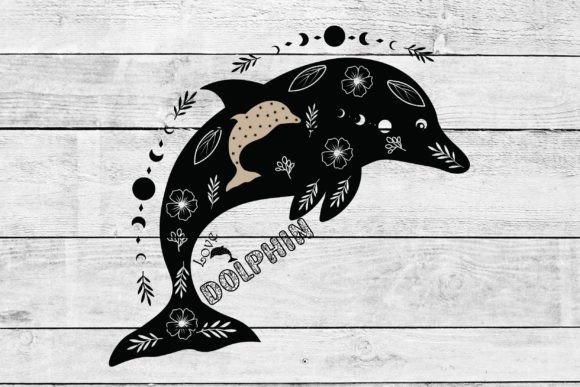
The moment it loaded in my digitizing software, I noticed how the dolphin arcs *with* the floral elements—not around them. Petals curl like water ripples; leaves taper naturally into the dolphin’s tail. There’s no forced symmetry, no cluttered center—just balanced negative space and gentle movement. It reads as joyful without being childish, elegant without feeling stiff. That makes Dolphin Floral ideal for projects where tone matters: a nursery wall hanging, a women’s organic cotton tote, or a linen tea towel for a seaside café pop-up.
Where Dolphin Floral Truly Shines (and Where It Needs Care)
I tested it across five real product types: a medium-weight canvas tote bag, a fleece-lined sweatshirt, a 100% cotton baby onesie, a twill baseball cap, and a lightweight linen pillow cover. Here’s what stood out:
- On tote bags and sweatshirts: The design breathes beautifully. The dolphin’s curve follows the natural drape of the fabric, and the floral accents add texture without overwhelming. Satin stitch details on petals stayed crisp with mid-weight cutaway stabilizer—no puckering, even after two washes.
- On baby onesies: It worked—but only with careful prep. I reduced the size to 3.2" wide and switched to a lightweight tear-away stabilizer. The fine stems and small flower centers held up, but I’d avoid using it below 2.8" on infant garments unless simplifying the file first.
- On caps: Tricky, but doable. The curved layout actually helped—it followed the crown’s contour better than rigid geometric designs. Just make sure your hoop fits the front panel comfortably, and use a cap frame with firm support. Avoid placing it too high on the crown where stitch tension can distort delicate loops.
- On linen and tea towels: Perfect. The open structure of Dolphin Floral lets the fabric texture show through between stitches—a huge plus for handmade presentation and boutique branding.
- On dark fabrics: It reads clearly with good thread contrast—especially if you choose a soft ecru or seafoam for the dolphin and warm coral for the flowers. But avoid ultra-fine details (like tiny stamen) in black-on-black combos; they’ll vanish.
What Dolphin Floral Says About Your Finished Product
This isn’t just decoration—it’s a subtle signal to your customer. When someone sees Dolphin Floral embroidered on a kitchen towel, they don’t just see a dolphin. They sense care, intention, and a quiet understanding of balance. That lifts perceived value. On Etsy, I’ve seen similar designs command 25–40% higher pricing when paired with thoughtful stitching and natural fabric pairings. It also builds trust: buyers recognize that a well-executed machine embroidery design reflects professionalism—not just a quick Cricut cut.
Practical Notes Every Embroidery Designer Should Keep Handy
Before you load Dolphin Floral into your machine or list it in your shop, pause and ask yourself:
- Did I test it on scrap fabric first? Especially important for textured or stretchy materials—what looks clean in vector form may shift during stitching.
- Is the stitch density appropriate? This design leans moderate—not overly dense, but not sparse either. If you’re using it on performance apparel or thin knits, consider lightening fill areas manually.
- Does it scale cleanly? Try shrinking it to 2.5" and enlarging to 5.5". Check corners, curves, and small floral tips—they should remain distinct, not blobby or broken.
- Have I reviewed thread color contrast on both light and dark mockups? A printable mockup saves time—and avoids disappointed customers.
- Am I using the right stabilizer? Cutaway for stable wovens (totes, aprons), tear-away for lighter cottons (onesies, towels), and cap-specific foam for headwear.
- Is this licensed for commercial use? Since Dolphin Floral is delivered as SVG, EPS, AI, PDF, and DXF files—and marketed for t-shirt design, sticker making, and printing—confirm whether your intended use (e.g., selling embroidered patches or digital embroidery files) falls within its license terms. When in doubt, contact the seller.
Who Should Reach For Dolphin Floral—Right Now
If you’re an Etsy seller building a coastal-themed shop, this is a quiet powerhouse. Pair it with neutral linens, oatmeal canvas, or heather grey fleece—and you’ve got instant cohesion. Craft fair vendors will love how it photographs: soft, distinctive, and gift-ready. Small shop owners can use it across categories—baby embroidery, holiday embroidery (think “ocean calm” for baby showers), and even wedding favors (embroidered napkins or coasters). And for digital product sellers, it’s a strong candidate for a curated embroidery bundle—especially when grouped with complementary nautical or botanical motifs.
A Final Thought: Design Is Decision-Making
Dolphin Floral doesn’t shout. It invites. It works because it respects the craft—not just as decoration, but as part of a larger story: the feel of a hand-stitched gift, the quiet pride in a small-batch product, the confidence of offering something that looks equally at home on a baby’s onesie or a boutique owner’s apron. As a graphics asset, it’s clean and adaptable. As a print template, it bridges digital and physical with grace. But its real strength? It reminds us that the best embroidery designs don’t just sit on fabric—they belong there.