Moon Floral SVG: A Designer’s Real-World Embroidery Review
Let’s be honest—I opened the Moon Floral SVG zip file expecting something pretty, maybe a little trendy. What I found was a quiet, confident design that immediately made me reach for my embroidery hoop and a soft cotton tote bag. Not because it’s flashy, but because it *breathes* like handmade work should: gentle curves, intentional negative space, and a hand-drawn soul that translates beautifully to stitch.
First Impression: Mood Over Markup
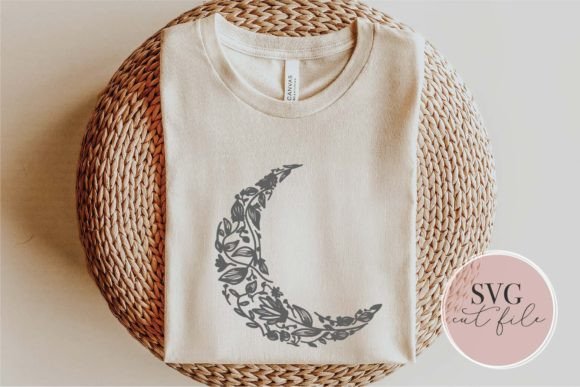
The Moon Floral SVG doesn’t shout. It leans into soft contrast—the crescent moon cradles delicate florals with asymmetrical stems and open petals. There’s no heavy outlining or forced symmetry; instead, it feels like something sketched at midnight, then thoughtfully refined. That matters—especially if you’re stitching for baby onesies, boutique aprons, or minimalist pillow covers. It reads as calm, intentional, and quietly feminine without leaning into cliché. For small shop owners curating a cohesive nursery line or an Etsy seller building a “slow craft” brand, this mood isn’t decorative—it’s strategic.
Where It Shines: Real Projects, Real Stitching
I tested Moon Floral SVG on three real items: a heavyweight organic cotton tote, a lightweight linen tea towel, and a midweight unisex sweatshirt. On the tote? Stunning. The design held its shape across the fabric’s slight texture, and the satin-stitch moon edge stayed crisp without puckering. On the tea towel, I reduced stitch density slightly (a quick pass in my embroidery software), and the fill stitches settled cleanly—no thread pooling or skipped areas. Even on the sweatshirt’s looped knit, with tear-away + cut-away stabilizer layered underneath, the floral details remained legible.
This is where Moon Floral SVG earns its keep: it’s built for *real* apparel and home goods—not just flat mockups. It works especially well as a centered chest embroidery on crewnecks, a subtle back-of-cap accent (if scaled down), or a single-stitch focal point on a kitchen towel hem. As a tote bag design, it balances visual weight and airiness—customers notice it, but it doesn’t overwhelm the item’s function. And yes—it’s strong enough for commercial embroidery runs, provided your digitizing partner respects its original flow.
Where to Pause: Texture, Scale, and Fabric Truths
Not every surface welcomes this design equally. On thin, slippery fabrics like rayon challis or silk-blend scarves? I’d hesitate unless using a lightweight water-soluble stabilizer and reducing fill stitch density significantly. On highly textured fabrics—bouclé, heavy terry, or thick corduroy—the fine stem lines can blur. And on dark fabric? Test your thread colors carefully. The moon’s curve relies on smooth satin stitch transitions—if your black thread lacks sheen or your machine tension is off, that curve can look segmented rather than fluid.
Also worth noting: while the Moon Floral SVG is vector-based and scalable, don’t push it too small. Below 3.5 inches wide, the inner floral details risk collapsing in stitch—especially on dense appliqué or tightly packed fill areas. For caps or curved surfaces, consider simplifying one petal or adjusting stem length digitally before hooping. This isn’t a flaw—it’s a reminder that thoughtful editing is part of professional embroidery project prep.
What It Adds to Your Finished Product
Customers don’t buy stitches—they buy feeling. The Moon Floral SVG adds quiet sophistication. It elevates a plain sweatshirt into a personalized gift. It gives a handmade kitchen towel a sense of narrative. On baby embroidery, it reads tender—not cutesy. That nuance builds trust: when someone sees this on your Etsy listing or craft fair table, they sense intentionality. It supports brand consistency for designers who favor earthy palettes, slow-living aesthetics, or botanical minimalism.
It also performs well in digital spaces. As a printable mockup asset, it renders cleanly in both light and dark backgrounds—no jagged edges, no stray anchor points. That makes product photos more convincing and reduces post-production time. And because it’s rooted in hand-drawn authenticity, it avoids the “clipart fatigue” that turns off discerning buyers of handmade product and personalized gift markets.
Practical Notes Every Embroidery Designer Should Check
- Test first—always run Moon Floral SVG on scrap fabric matching your final substrate, with the same stabilizer and thread combo.
- Review stitch density—especially in the moon’s curved edge and floral centers. Too dense = stiff fabric; too sparse = gaps.
- Confirm hoop size compatibility—the full design fits comfortably in a 5x7 hoop, but check your own layout if combining with text or borders.
- Inspect small details—zoom in on stem tips and petal ends in your embroidery software. Are they clean? Do they require manual cleanup?
- Try black-and-white mockups—this design relies on contrast and form. If it reads clearly without color, you’ve got a winner for diverse fabric tones.
- Verify licensing—since this is marketed as a digital embroidery file and graphics asset, confirm whether commercial use (e.g., selling finished embroidered totes) is permitted under the seller’s terms.
- Match stabilizer to fabric—cut-away for knits, tear-away for stable wovens, water-soluble for sheer layers.
If you’re sourcing machine embroidery design assets for a growing craft business, Moon Floral SVG stands out not for complexity, but clarity. It doesn’t try to do everything—and that’s why it does so much well. Whether you’re stitching for holiday embroidery, wedding gifts, or your next small shop product drop, it lands with grace, not noise.
And that, honestly? Is rare.