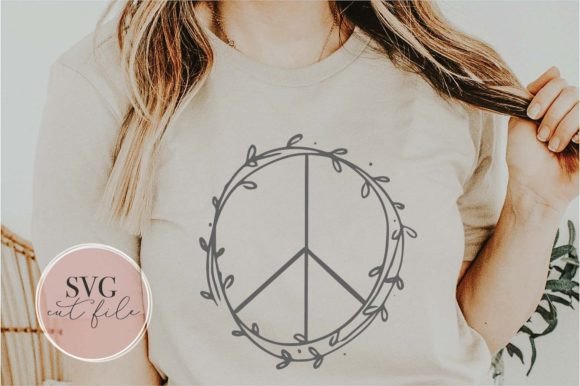
Peace Sign SVG: A Designer’s Real-World Embroidery Review
As someone who’s stitched hundreds of custom pieces—from boutique aprons to baby onesies—I opened Peace Sign SVG expecting a clean, symbolic graphic. What I found was more nuanced: a floral-infused peace sign that straddles vintage charm and modern minimalism. It’s not just a shape—it’s a mood. Soft curves, subtle petal-like flourishes around the circle, and balanced negative space give it warmth without clutter. That matters—especially when you’re translating vector lines into thread.
First Impressions: Where This Design Naturally Lives
I immediately pictured it on a linen tea towel for a small shop’s spring collection—soft fabric, light stitching, quiet intention. Not loud. Not ironic. Just calm, grounded, handmade. That’s the core strength of Peace Sign SVG: it reads as intentional, not decorative filler. It doesn’t scream “look at me,” but it holds attention when placed thoughtfully—on the chest of an organic cotton sweatshirt, the corner of a nursery pillow cover, or centered on a recycled-cotton tote bag meant for farmers’ markets or yoga studios.
This isn’t a design built for maximalist embroidery projects. There’s no dense fill stitch jungle or intricate lettering. Instead, it leans into graceful line work and gentle proportion—ideal for satin-stitched outlines or delicate applique borders. That makes it unusually versatile across age groups and contexts: equally fitting on a toddler’s onesie (scaled down) or a wedding guest’s embroidered handkerchief (in ivory thread on silk).
How It Performs Across Real Embroidery Projects
In practice, Peace Sign SVG shines where subtlety adds value—not volume. On medium-weight cotton tees? Clean and legible, especially with a light stabilizer and 40-weight thread. On brushed fleece sweatshirts? Holds up well if digitized with slightly wider satin stitches to bridge the nap. As a patch? Excellent candidate—its closed-loop structure avoids fraying edges, and the floral accents read clearly even at 2.5 inches tall.
For baby embroidery, I’d use it on gauzy muslin blankets or bibs—but only after testing stitch density. Too many tight fill areas could stiffen delicate fabrics. Likewise, on curved surfaces like caps or beanies, I’d avoid placing it near the crown seam unless the digitization accounts for stretch; the circular symmetry helps, but fabric distortion is real.
Holiday embroidery? Surprisingly strong for Earth Day, solstice gifts, or mindful living bundles. Paired with neutral thread palettes—oatmeal, sage, charcoal—it feels grounded and timeless, not seasonal or dated. And for Etsy sellers listing digital embroidery files, this design bridges niches: boho home goods, wellness brands, eco-conscious apparel, and gender-neutral baby collections.
Where to Use Peace Sign SVG With Intention—Not Assumption
This design rewards thoughtful placement. Avoid cramming it into tiny hoops (<3 inches) without checking how the floral details resolve—petals can blur or vanish if scaled too small. On textured fabrics like terry cloth or bouclé, simplify or omit inner flourishes during digitizing. On dark fabric, test contrast early: light thread may need a white underlay; dark thread on black can disappear unless stitch density is dialed back.
Stretchy knits demand extra stabilizer—and possibly a slight reduction in satin stitch width—to prevent puckering. And while Peace Sign SVG works beautifully as a standalone motif, layering it over busy prints or dense embroidery risks visual competition. Let it breathe.
What It Adds to Your Finished Product—Beyond Aesthetics
Customers don’t just buy a peace sign. They buy what it signals: care, calm, alignment. When stitched cleanly onto a handmade product, Peace Sign SVG quietly elevates perceived value. It reads as considered—not generic clip art. That builds trust, especially for craft businesses where authenticity is currency.
For small shop owners, it supports brand consistency without locking you into one style: pair it with serif typography for apothecary labels, or let it stand alone on minimalist packaging. For personalized gifts, it offers emotional resonance without being prescriptive—peace as quiet strength, not protest.
Practical Designer Notes Before You Stitch
- Always test on scrap fabric first—especially if using it for commercial embroidery or client work. Check how the floral elements hold up after washing and drying.
- Review thread color contrast across light and dark backgrounds. A single-color mockup won’t reveal how much the design relies on tone-on-tone nuance.
- Inspect small details at actual size: Are petal tips sharp or fuzzy? Does the circle close cleanly? These define professionalism in finished products.
- Confirm hoop size compatibility. If your machine requires re-hooping mid-design, consider whether the layout allows for clean registration.
- Use appropriate stabilizer: Tear-away for stable wovens, cut-away for knits, and lightweight fusible for sheer fabrics.
- Check licensing before selling finished items—this is a Graphics file, not pre-digitized embroidery, so confirm usage rights for physical products and digital resale.
- Compare black-and-white mockups to assess clarity without color distraction—a crucial step for T-Shirt Designs meant to communicate at a glance.
Bottom line: Peace Sign SVG isn’t flashy—but it’s reliable, adaptable, and emotionally intelligent. It fits seamlessly into a craft business’s toolkit, whether you’re designing for slow-living brands, eco-conscious boutiques, or heartfelt personalized gifts. It earns its place not by shouting, but by stitching true.